When a Loved One Dies and Their Photos Stay Locked Away: What Families Need to Know

For most American families, the photographs stored on a parent's old laptop or a grandparent's iPhone represent something irreplaceable — birthday mornings, holiday gatherings, ordinary afternoons that only feel extraordinary in retrospect. When that person passes away, those images do not automatically transfer to the people who loved them most. Instead, they sit behind passwords, encryption layers, and corporate terms of service that were never designed with grief in mind.
This is one of the most quietly devastating aspects of modern loss, and it affects more families every year as digital storage becomes the default — and often the only — home for personal photographs.
The Barriers Are Real, and They Are Multiple
Families attempting to access a deceased relative's digital photographs typically encounter at least one of several significant obstacles, and frequently more than one at the same time.
Password-protected devices represent the most immediate barrier. A locked iPhone or Android device without a known PIN is, for practical purposes, a sealed vault. Apple and Google both implement encryption standards that prevent access even when a device is physically in your possession. Law enforcement agencies with substantial resources have struggled to bypass these protections. For a grieving family member working alone, the challenge is exponentially greater.
Cloud account restrictions create a separate layer of difficulty. Services such as Google Photos, iCloud, and Amazon Photos operate under terms of service that treat accounts as non-transferable personal property. Even with a death certificate and documented proof of relationship, gaining authorized access to a deceased person's cloud storage requires navigating platform-specific legacy policies — some of which are more accommodating than others, and many of which move slowly.
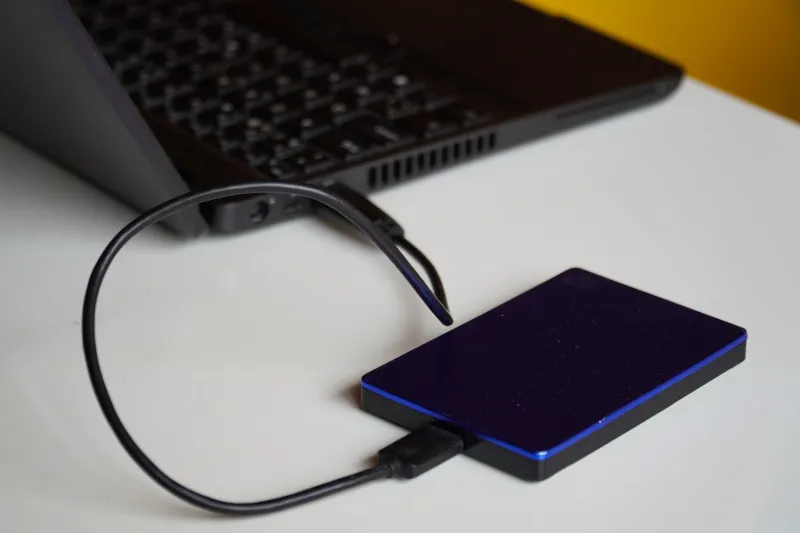
Encrypted storage drives present a technical challenge that even professional recovery specialists approach with caution. If a relative stored photographs on an external drive protected by software encryption, and the password or recovery key is unknown, the data may be mathematically unrecoverable regardless of the effort applied.
Shared cloud services with lapsed billing add yet another complication. If a family member's cloud subscription expired before or shortly after their death, the stored content may have been deleted according to the platform's data retention schedule — sometimes within weeks.
What Platform Policies Actually Allow
Several major technology companies have introduced formal processes for handling account access after death, though the scope of what families can actually retrieve varies considerably.
Apple's Digital Legacy program, introduced in 2021, allows account holders to designate legacy contacts who can request access to certain account data — including iCloud Photos — after the account holder dies. Without a designated legacy contact on file, surviving family members must petition Apple directly, a process that requires a court order in many cases.
Google offers a similar framework through its Inactive Account Manager, which allows users to pre-authorize data sharing with designated individuals. Families of users who never configured this feature must submit a formal request and provide documentation, with no guarantee of full access.
Meta, which owns Facebook and Instagram, permits verified immediate family members to request the removal of an account or, under certain conditions, the memorialization of a profile. However, direct access to private photo content is not routinely granted.
The consistent thread across these platforms is that proactive planning by the account holder — before death occurs — is what makes access possible. Reactive requests from bereaved families face far steeper barriers.
Technical Recovery Options When Devices Are Locked
For families holding a physical device they cannot unlock, several paths exist, though none are guaranteed.
Professional data recovery services that specialize in mobile devices may be able to extract data from certain device models under specific conditions. The success rate depends heavily on the device generation, the operating system version, and whether the device's storage has been damaged. It is worth noting that reputable recovery professionals will always assess feasibility honestly before accepting payment — families should be cautious of any service that promises results without first evaluating the specific device.
For older Android devices or computers running Windows, the range of recovery options tends to be somewhat broader than for current Apple hardware, which employs some of the most robust consumer encryption available. A professional consultation is the appropriate first step before attempting any access independently.
If the deceased person used a password manager, access to that tool — if the master password is known or can be legally obtained — may unlock credentials for cloud accounts and other storage services simultaneously.
The Legal Dimension Families Often Overlook
In the United States, digital asset inheritance exists in a legal gray zone that varies by state. The Revised Uniform Fiduciary Access to Digital Assets Act (RUFADAA), adopted in some form by the majority of states, provides executors and personal representatives with a legal framework for requesting access to digital assets — but only if the account holder did not explicitly prohibit such access through platform tools or estate documents.
Families navigating this process should work with an estate attorney familiar with digital asset law in their state. A properly documented legal request carries significantly more weight with platform providers than an informal inquiry, and in some cases it is the only avenue that produces results.
What Families Can Do Right Now to Protect Their Own Legacy
If reading this article prompts any reflection on your own digital estate — and it should — the following steps are among the most effective ways to ensure your photographs remain accessible to the people who will want them most.
- Configure legacy contact settings on Apple, Google, and any other platform where you store photographs. This single action takes less than ten minutes and can save your family months of frustration.
- Document your account credentials in a secure, accessible location — a password manager with a designated emergency contact, a sealed letter with your estate documents, or a digital estate planning service.
- Maintain a physical or offline backup of photographs that matter most. An external drive stored safely at home, updated periodically, remains one of the most reliable safeguards against platform policy changes, account closures, and subscription lapses.
- Discuss digital assets explicitly in your estate planning conversations. An estate attorney can help ensure your wishes regarding digital photographs and other stored content are legally documented.
- Designate someone you trust with working knowledge of where your photographs live and how to access them. This does not require sharing passwords today — it requires having the conversation.
Recovery Is Possible, But Time Matters
For families already in crisis — holding a locked device or staring at an inaccessible account — the situation is not necessarily hopeless. Professional data recovery specialists, combined with platform-specific legal processes and, where applicable, estate legal representation, have helped many families retrieve photographs they feared were gone permanently.
What consistently makes the difference is acting promptly. Platform data retention policies do not pause for grief. Devices left powered on can cycle through updates that alter recovery prospects. The sooner a family engages qualified professional assistance, the more options remain available.
The photographs stored on your loved one's devices represent a record of a life that cannot be reconstructed. Treating that record with the same seriousness as any other inherited asset is not an overreaction — it is the appropriate response to what those images actually mean.